Young Boy Embroidery Design Review for Small Business Merch
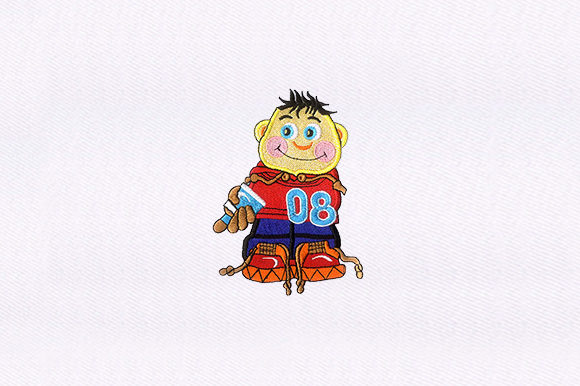
As an experienced embroidery designer who has digitized thousands of logos and reviewed countless machine embroidery design files for commercial use, I approach every new asset with a critical eye. When I first loaded the Young Boy file into my software, my immediate impression was one of approachable charm mixed with classic utility. For small business owners, boutique operators, and handmade brands, the visual personality of a design dictates its success on merchandise. Young Boy strikes a balance that feels neither overly juvenile nor strictly corporate; instead, it offers a friendly, slightly rustic aesthetic that works exceptionally well for creative studios, bakeries, florists, and local shops looking to humanize their brand.
Evaluating Visual Personality for Brand Identity
The title Young Boy suggests a focus on youth, growth, or perhaps a specific character archetype often found in heritage branding. In the context of brand identity, this design does not scream "high-tech" or "luxury minimalism." Rather, it exudes a sense of tradition and warmth. For a café wanting to embroider staff aprons or a pet brand creating custom collar tags, this emotional resonance is vital. The design likely features clean lines and defined shapes that translate well into thread, avoiding the fuzzy edges that plague low-quality digitizing. When assessing a digital embroidery file for business use, we look for clarity. Does the design hold its shape when scaled down? Does it look professional on a dark uniform? Young Boy appears to have the structural integrity required for these applications, making it a strong candidate for businesses that value a handmade, authentic presentation.
Real-World Applications for Small Business Merch
The true test of any embroidery file is its versatility across different products. I envision Young Boy performing admirably in several key areas of small business merch:
- Embroidered Patches: This is arguably the strongest use case. A woven or merrow-edge patch featuring this design could be sewn onto tote bags, backpacks, or denim jackets sold in a boutique. It serves as a durable brand mark that customers love to collect.
- Staff Uniforms and Aprons: For a bakery or flower shop, consistency is key. Placing Young Boy on the chest of an apron or the sleeve of a work shirt creates a cohesive team look. The design's likely moderate complexity ensures it won't get lost against the texture of canvas or twill.
- Cap Embroidery: Front-panel embroidery on baseball caps is a staple of promotional merchandise. If the design fits within a standard 2.5-inch width, it becomes an instant hit for customer gifts or event giveaways.
- Tote Bag Design: Canvas totes are ubiquitous at markets and craft fairs. A centered placement of this design adds value to a simple bag, turning it into a walking advertisement for your brand.
For Etsy sellers and merch creators, the ability to use one asset across these various mediums maximizes return on investment. Whether you are creating custom apparel for a family reunion or branded goods for a local festival, the adaptability of this file is a significant asset.
Technical Considerations and Production Challenges
While the aesthetic appeal is high, a professional review must address the technical realities of production. Not every design works everywhere. Here is where you need to exercise caution with Young Boy:
- Small Patch Sizes: If you intend to create very small patches (under 2 inches), inspect the stitch density. High density in small areas can cause the fabric to pucker or the details to merge into a solid blob of thread. Always run a test stitch-out on your intended fabric before committing to a large batch.
- Curved Surfaces: Cap fronts and rounded tote bags present challenges. If the design has large solid fill areas, it may pull away from the fabric over time on curved surfaces. Ensure your digitizer or the original file creator has accounted for push-pull compensation.
- Thread Color Contrast: On dark uniforms, light thread colors are essential. However, if Young Boy relies on subtle shading or similar tonal values, it might disappear on black or navy backgrounds. Review the thread colors in your software and adjust the sequence or shades if necessary to ensure visibility.
- Fabric Texture: Highly textured fabrics like looped towels or rough canvas can obscure fine details. This design is best suited for smooth to medium-texture fabrics like poplin, twill, or standard cotton blends.
Impact on Customer Trust and Product Value
In the eyes of the consumer, embroidery signals quality. Unlike a heat transfer that cracks or a screen print that fades, an embroidered patch or direct stitch implies durability and care. Using Young Boy as a primary brand marker elevates the perceived value of your handmade product. It tells the customer that you invest in your presentation. For a creative studio, having consistent design assets like this across all touchpoints—from the employee's apron to the packaging accent—builds recognition. It fosters trust. When a customer sees a crisp, well-executed logo on a gift item, they associate that professionalism with your entire business operation. This visual consistency is crucial for buyer engagement and repeat business.
Practical Notes for the Professional Embroiderer
Before you begin mass production for your clients or your own inventory, adhere to these practical steps to ensure the finished product meets high standards:
- Test in Black and White: Convert the design to monochrome in your viewing software. This reveals if the shape holds up without relying on color differentiation. If it looks muddy in black and white, it may lack definition.
- Verify Hoop Size: Check the dimensions of the design against your available hoops. While the file formats suggest broad compatibility, confirm the specific inch/mm measurements to ensure it fits your machine's capacity without re-hooping.
- Stabilizer Selection: Choose the right stabilizer for the fabric. Cut-away stabilizer is generally recommended for items that will undergo frequent washing, such as staff uniforms, to prevent distortion over time.
- Create a Printable Mockup: Before stitching a single thread, create a printable mockup superimposed on a photo of the actual garment. Show this to your client or use it for your own planning to visualize scale and placement.
- Check Commercial Licensing: This is paramount. Ensure that your purchase of the Young Boy file includes rights for commercial embroidery. Some files are for personal use only. Verify the license terms explicitly before selling items featuring this design.
- File Format Compatibility: The design comes in a vast array of formats including DST, PES, EXP, JEF, and XXX. Select the native format for your specific machine brand whenever possible to minimize conversion errors, though these universal formats are generally reliable.
In conclusion, Young Boy represents a versatile tool for the modern embroidery entrepreneur. Its blend of friendly aesthetics and functional design makes it suitable for a wide range of Boys themed or general heritage-style projects. By respecting the technical limitations regarding size and fabric, and by rigorously testing before full-scale production, you can leverage this embroidery asset to build a stronger, more recognizable brand presence. Whether it ends up on a barista's apron or a limited-edition tote, the quality of the execution will ultimately define the success of the merchandise.